Blog
Teaching Matters: Eating Etiquette

“Food is our common ground, a universal experience.”
-James Beard (1903-1985), American author
Previously on the blog, we’ve addressed how to make positive first impressions in a variety of settings, from a handshake to a professional email.
But table manners also go a long way. Whether you’re grabbing a bite out with friends or visiting a new acquaintance for dinner, the way you eat speaks volumes. Routine dining habits in other countries may come across as impolite in the U.S., and many English language learners unfamiliar with American culture lack this awareness. Below are a list of Dos and Don’ts to make your students feel comfortable when eating with Americans in public. As an instructor, feel free to add your own and encourage your class to do so too!
General Dos
- Try to have light conversation with everyone at the table
- Do put your napkin in your lap. When you are finished with your dinner, place it loosely on the table, not on the plate and never on the chair.
- Do raise your hand and say, “Excuse me, please!” when you need help in a restaurant.
- Do assume each person will pay for their share of the bill when eating in a group unless someone clearly states they will pay. Likewise, many couples split the bill while dating. This tradition is called “going Dutch”.
- ________________________________________________________________
- ________________________________________________________________
- ________________________________________________________________
- ________________________________________________________________
General Don’ts
- Don’t eat too fast – take time to enjoy the food.
- Don’t talk when your mouth is full of food.
- Don’t chew with your mouth open.
- Don’t place your elbows on the table and keep your left hand in your lap unless you are using it.
- Don’t make loud eating noises such as slurping (e.g. soup) and burping.
- Don’t blow your nose at the dinner table. Excuse yourself to visit the restroom. Wash your hands before returning to the dining room.
- Don’t answer your phone during the meal.
- Don’t floss, use a toothpick, and/or apply makeup at the table.
- Don’t say that you’re going the restroom. Instead, use “Excuse me” or “I’ll be right back” before leaving the table.
- ________________________________________________________________
- ________________________________________________________________
- ________________________________________________________________
- ________________________________________________________________
Manners matter. Addressing eating etiquette in the classroom helps ESL students create lasting impressions and compelling conversations with new American friends. For an additional exercise, pair students together and have them compare these do’s and don’ts with similar advice from their home country. How are they similar? How are they different?
This blog post features content from the second edition of Compelling Conversations – Vietnam, released in November and available now on Amazon! Check out our featured sample chapter, Delicious Choices, here. For more sample chapters from this and our other titles, click here.
Ask more. Know more. Share more.
Create Compelling Conversations.
Visit www.CompellingConversations.com
About the Author
Eric H. Roth teaches international graduate students the pleasures and perils of academic writing and public speaking in English at the University of Southern California (USC). He also consults English language schools on communicative methods to effectively teach English. Roth co-authored Compelling Conversations: Questions and Quotations on Timeless Topics in 2006 to help English language learners increase their English fluency. Recommended by English Teaching Professional magazine, the advanced ESL textbook has been used in over 50 countries in English classrooms and conversation clubs. Easy English Times, an adult literacy newspaper, has published a monthly column, “Instant Conversation Activities,” based on the book since 2008. The first specific version for a particular country, Vietnam, was published in 2011. Compelling American Conversations came out in 2012, and Compelling Conversations – Japan arrived in 2015. Eric enjoys sharing reflections, resources, and teaching tips on this #ESL #EFL #ELT blog.
Culture Corner: Identifying & Respecting Personal Space

“Courtesy costs nothing.” -Ralph Waldo Emerson (1803-1882), American writer, philosopher How close is too close? How can English language learners – and native speakers too! – create more comfortable conversation spaces with strangers, friends and family alike? It often sta…
The post Culture Corner: Identifying & Respecting Personal Space appeared first on Compelling Conversations.
Culture Corner: Identifying & Respecting Personal Space

“Courtesy costs nothing.”
-Ralph Waldo Emerson (1803-1882), American writer, philosopher
How close is too close? How can English language learners – and native speakers too! – create more comfortable conversation spaces with strangers, friends and family alike?
It often starts with an awareness of others’ personal space. Personal space is the invisible amount of physical distance considered culturally appropriate between yourself and others when meeting and talking. This can vary from country to country.
For instance, Americans tend to require more “elbow room” than other cultures. Standing too close to an American during a conversation might make them feel as though you’re “in their face;” as a result, many Americans will pull back to restore a more comfortable distance.
These boundaries also change depending on social settings and the nature of your relationship with your conversation partner(s). So, let’s review some potential conversation settings and how they affect the concept of personal space.
Public Setting 12 ft. or more (3.6 m.)
Events such as concerts, assemblies, worship services, graduations, and similar communal gatherings fall under this category. The greater the guest of honor’s status, the larger their distance from the audience must be so that all attendees are included. A good example of this is how congregation leaders often speak from behind an elevated podium in houses of worship.
Social Setting 4ft. (1.2 m.)
We often meet acquaintances and strangers in social settings such as parties and museums. The distance and comfort level in social settings vary. In the beginning, it is safer to keep more of a distance. As you continue speaking with the individual, a closer distance may gradually feel comfortable. The easiest way to handle this: when you first meet someone, say your greeting, shake hands, and step back a bit.
Personal Setting 1.5 ft. (0.45 m.)
Personal settings are reserved for conversations with family and close friends that you’ve come to trust and treasure.
Intimate Setting 0 – 1.5 ft. (0 – 0.45 m.)
Closer, more private settings between close friends, lovers, and family can be called intimate space. When entering such an intimate space, permission is needed or else it could be perceived as a threat. In situations like a crowded elevator or subway, where close physical contact is unavoidable, keep it impersonal by avoiding eye contact and keeping your hands to yourself.
While these guidelines an excellent rule of thumb, keep in mind that they are flexible. Encourage your students to be observant; paying attention to a conversation partner’s body language goes a long way in determining how receptive they are to moving closer or initiating physical contact. People are much more open to continuing a conversation if you respect their space from the get go!
For further classroom discussion, pair up your students. Ask them to compare notions of personal space in the United States with another country they’ve lived in or visited. How are they similar? How are they different?
How do you define your own personal space? How would you ask others to respect it?
This blog post features content from the second edition of Compelling Conversations – Vietnam, released in November and available now on Amazon! Check out our featured sample chapter, Delicious Choices, here. For more sample chapters from this and our other titles, click here.
Ask more. Know more. Share more.
Create Compelling Conversations.
Visit www.CompellingConversations.com
It’s A Breeze: Now available on Teachers Pay Teachers!
Let’s “learn the ropes” of English – idiom by idiom!
Exciting news, English teachers: All seven, thematic units of Chimayo Press’ It’s A Breeze are now individually available on our Teachers Pay Teachers store!

Written for high school ESL students and adult English language learners in the United States, It’s A Breeze improves their vocabulary and cultural literacy. The comfortable pace, unit quizzes (with answer keys) and an index of American idioms and expressions make this unique text comfortable for both classroom use and self-study.
Each chapter explores a single genre-specific American idiom in connection with the overall unit theme. Provided with clear definitions, sample sentences, short readings, comprehension checks, and more, students will find speaking English less difficult and more fun – even “a breeze.”
Our TPT store features over 25 (and counting!) comprehensive, fluency-focused lessons and bundles for your classroom needs. The collection currently includes select chapters from Compelling Conversations and Compelling American Conversations, with additional series content coming soon.
All 42 of It’s A Breeze’s short lessons are available in full through both Amazon and Createspace. We also encourage you to check out the following sample chapters. Each is free to download for classroom use!
For sample chapters from our other titles, click here.
Ask more. Know more. Share more.
Create Compelling Conversations.
Visit www.CompellingConversations.com
About the Author
Eric H. Roth teaches international graduate students the pleasures and perils of academic writing and public speaking in English at the University of Southern California (USC). He also consults English language schools on communicative methods to effectively teach English. Roth co-authored Compelling Conversations: Questions and Quotations on Timeless Topics in 2006 to help English language learners increase their English fluency. Recommended by English Teaching Professional magazine, the advanced ESL textbook has been used in over 50 countries in English classrooms and conversation clubs. Easy English Times, an adult literacy newspaper, has published a monthly column, “Instant Conversation Activities,” based on the book since 2008. The first specific version for a particular country, Vietnam, was published in 2011. Compelling American Conversations came out in 2012, and Compelling Conversations – Japan arrived in 2015. Eric enjoys sharing reflections, resources, and teaching tips on this #ESL #EFL #ELT blog.
It’s A Breeze: Now available on Teachers Pay Teachers!
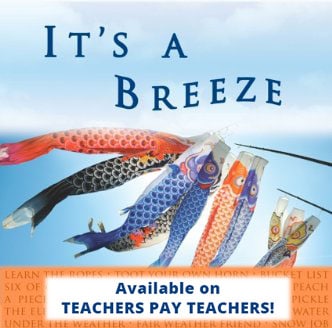
Let’s “learn the ropes” of English – idiom by idiom! Exciting news, English teachers: All seven, thematic units of Chimayo Press’ It’s A Breeze are now individually available on our Teachers Pay Teachers store! Written for high school ESL students and adult English language learners in the Un…
The post It’s A Breeze: Now available on Teachers Pay Teachers! appeared first on Compelling Conversations.